
Almost around seventy percent of field techs increasingly choose compression connectors over soldering for hard-to-reach or gas-service installations. That trend reinforces the critical need for dependable, leak-tight joints on today’s job sites.
Best Website To Purchase 1 4 Compression Coupler
This concise guide dives into Compression Union Brass and other compression fittings commonly seen in plumbing, HVAC, and instrumentation in the United States. It shares useful guidance on picking the proper 1/4 compression fitting, installing brass union assemblies, and troubleshooting leak issues. It also addresses material matching.
Whether you’re a licensed plumber, HVAC tech, instrumentation engineer, or a skilled DIYer, this guide is for you. It centers on real-world use: quick setup, reusability, and how brass unions work when soldering is not feasible. We’ll break down 1/4 inch compression fittings vs couplers, calling out their top applications.
For parts and supplies, InstallationPartsSupply.com is a reliable source for brass compression union parts, nuts, and ferrules. They offer matching parts fast. The next sections outline sizing guidance, pressure limits, and installation tips to avoid leaks and cut down on return visits.
Top Takeaways
- Compression Union Brass provides a no-solder, reusable-style connection for multiple tubing materials.
- Brass compression union fittings are ideal for tight spaces and field repairs.
- 1/4 compression fitting and 1/4 inch compression fitting sizes are widely used in plumbing and instrumentation systems.
- InstallationPartsSupply.com stocks nuts, ferrules, and unions for fast replacement and proper matching.
- Correct selection and installation reduces leaks, with step-by-step details later in the guide.
What Brass Compression Union Fittings Are And How They Work
A brass compression union joins two tube sections without solder. It uses a fitting body, a compression nut, and ferrules for a secure seal. The 1/4compression fitting is often used in instrumentation, refrigeration, and plumbing service.
Definition And Core Components
The brass compression union fitting consists of three main parts. The union body receives line on both ends. The compression nut threads on to the body, pushing the ferrule (olive) into place. The olive creates a seal by deforming onto the tube’s OD.
Unions make it possible the linking of two tube ends inline without solder. Each end has its ferrule and nut, making quick joining of different tube lengths during service or job-site repairs.
Principle Of Operation
To assemble, slide the tube into the fitting body and snug the compression nut. As you tighten moves the nut, which forces the ferrule into the body’s tapered seat. This motion converts to radial squeeze around the line.
This radial compression forms a line-contact seal between the olive and tubing. A well-made fit delivers a metal-to-metal or metal-to-plastic seal based on materials. Wrong tightening can deform the ferrule or not seat properly, undermining the connection.
Materials And Compatibility Notes
Brass unions are valued for their corrosion resistance and malleability. They perform well with copper lines and many drinking-water systems. They also work with low-pressure gas service when assembled with gas-grade PTFE tape and are kept accessible.
For higher PSI or harsh fluids, stainless fittings are usually preferred. Plastic compression fittings are fine for low-pressure water jobs. The 1/4compression fitting is available in brass and stainless to match different tube ODs, system pressures, and chemical requirements.
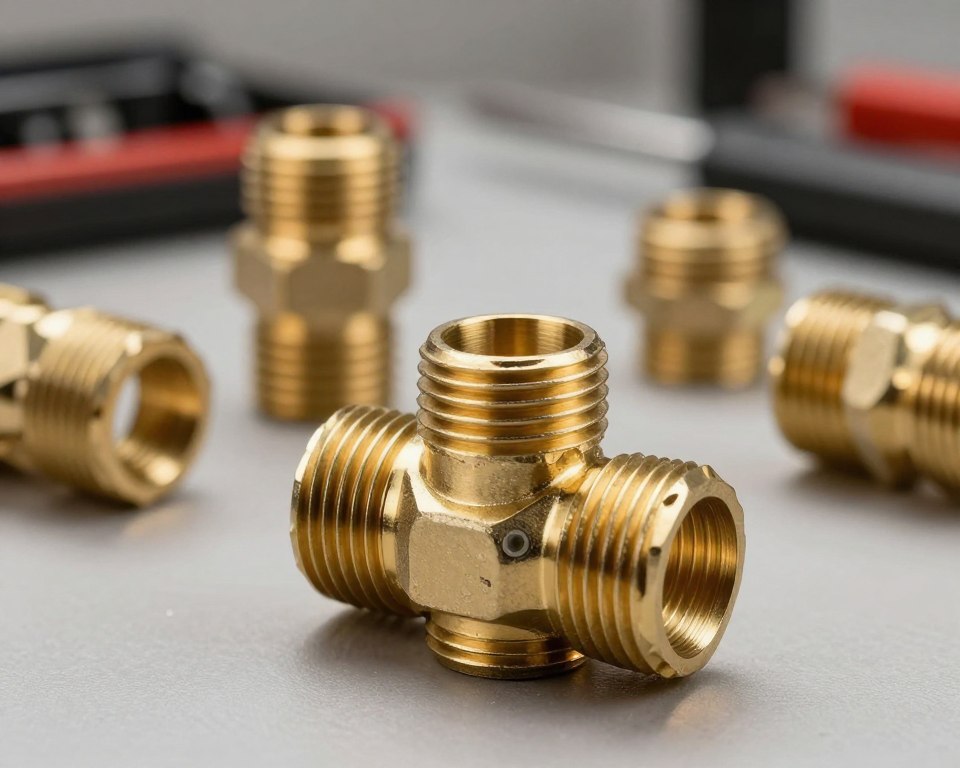
Compression Union Brass: Benefits, Common Uses, And Where It Fits
Compression Union Brass unions bring together strength and practical use, ideal for plumbing and instrumentation tasks. They can be installed rapidly, without the need for heat, making them ideal for compact or flammable zones. The 1/4 compression union and compact 1/4compression fittings are preferred for their small-footprint, reliable connections.
Key Advantages Of Brass Unions
Installation is rapid and tool-friendly. No open flame or flux and solder is needed, cutting job time and safety risks. Many brass compression union components are reusable, cutting costs on repeat service calls. Ferrules (olives) may need replacement after multiple assemblies.
Brass resists corrosion and flexes a bit under load, creating a tight seal with copper tubing. This reduces galvanic issues when used with copper or certain stainless components. Makers list many brass compression union fittings for wide temp and pressure ranges, suitable for both household and light industrial applications.
Typical Applications In The United States
In residential plumbing, brass compression unions are common under basins, at shutoff valves, and on water-heater connections. The 1/4 compression coupling is frequently used in beverage equipment, ice-making equipment, and small water lines that need on-site serviceability.
Gas distribution with serviceable copper runs sometimes relies on Compression Union Brass unions for inspection and quick disassembly. HVAC and refrigeration technicians rely on brass union fittings for service lines that must be disconnected and reconnected during routine service.
Instrumentation and industrial panels use small 1/4compression connectors for sampling, sensing, and pneumatic lines. These environments favor the 1/4 compression union for leak-resistant joints and fast replacement.
Why Choose Unions Over Other Fittings
Union fittings cut time compared to solder joints. Without a flame, work can continue in areas where heat is risky or where you need the system back online quickly. A Compression Union Brass union makes possible repositioning and later breakdown for repairs and changes.
Soldered connections often stay more compact and can cost less in raw materials. Union-style fittings deliver flexibility and service-call advantages, making them the top choice when you need access, speed, and reusability. For many installers, a 1/4 compression coupling strikes the sweet spot between space-saving size and dependable performance.
Selecting The Correct 1/4 Inch Compression Fitting And Related Sizes
Picking the correct fitting involves knowing the terminology and conducting a fast parts check. It’s essential to know if “1/4” refers to the tube outside diameter or the thread size before ordering. Many catalogs list multiple SKUs for tubing, union bodies, and inline joiners under the term “1/4 compression coupling”, “1/4compression fitting”, or “1/4compression coupler”.
Understanding common terms
It’s important to familiarize yourself with the core parts: the compression nut, ferrule (olive), union body, and coupler. The compression nut drives the ferrule against the line and the fitting taper. A union body joins two ports, while a coupler links two tubing ends in-line. Always check the manufacturer’s language on product pages for exact definitions.
Matching tubing OD, ferrule, and thread pitch
The tubing outside diameter must match the ferrule size perfectly. Ferrule geometry and body seat taper can change by brand. Combining a ferrule from one brand with a fitting body from another can lead to leaks. Ensure that the thread style and thread pitch match for matching parts. Know the difference between NPT tapered threads and straight threads that use sealant methods or O-rings.
Material notes and soft-tubing considerations
For PTFE or plastic tubing, verify the ferrule type and whether a support insert is required to prevent crushing. Brass ferrules bite differently than stainless ferrules. If you need better resistance to chemical media or heat, consider stainless alternatives over standard Compression Union Brass.
Pressure and temperature factors
Pressure specs differ based on material and size. Brass and miniature fittings, suitable for instrumentation lines, will have lower PSI than larger stainless compression fittings. Always consult the manufacturer’s pressure and temperature charts for the specific 1/4 compression coupling or 1/4compression coupler you plan to use.
Quick checklist
- Verify whether “1/4” = tubing OD or pipe thread size.
- Match tubing OD to ferrule size and brand profile.
- Confirm thread type and pitch; note NPT vs parallel threads.
- Confirm pressure and temperature ratings for Compression Union Brass or other options.
- For PTFE/plastic, verify need for tube inserts or secondary seals.
| Item | Typical Use | Key Check | Material Notes |
|---|---|---|---|
| 1/4 inch compression fitting | Pneumatic, instrumentation | Confirm whether 1/4 means OD or thread | Brass is common; stainless for higher pressure |
| 1/4compression fitting (compact) | Small lines, beverage systems | Ensure ferrule geometry matches | Some brands use unique ferrules |
| 1/4compression coupler | Inline tube connections | Confirm tube OD and internal bore | Plastic tube may require inserts |
| 1/4 compression coupling | Panel joins, instrumentation | Thread pitch and seal type | Compression Union Brass is widely used |
| Compression Union Brass | Two-port unions, mid-pressure systems | Check maker PSI/temp charts | Less suited for very high PSI or aggressive chemicals |
Best Installation Practices For Brass Compression Unions
Maintaining a brass compression union’s long-term performance starts with correct installation. Begin by properly prepping the tubing and parts before any tightening. This up-front attention is essential in avoiding leaks and problems later on.
Preparing tubing for a leak-tight seal
Use a good tube cutter to cut tubing straight. Remove any burrs and sharp edges or marks that could lead to leaks. It’s also important to check the tubing’s OD for being round. Non-round diameters, frequent with coiled tubing, can hinder proper ferrule seating.
Next, slide the compression nut and ferrule onto the tube in the correct order. Always use new olives, as they ensure a dependable seal, even on copper lines. For softer plastic tubing, consider using tubing inserts or reinforced ferrules to prevent wall collapse.
Proper tightening method
Begin by finger-tightening the compression nut. Then, follow the manufacturer’s recommended number of turns. This approach helps create the right seal without tightening too much.
It’s a common myth that tightening more always helps. Tightening too little can lead to a leaking seal. Excess tightening, on the other hand, can harm the seal surfaces, thread surfaces, or create leaks. After initial tightening, pressurize the system and tighten in tiny increments if slight weeps appear.
Using two wrenches and avoiding pipe twist
Brace the fitting body with one wrench while turning the nut with another. This method prevents tubing twisting and minimizes stress on connections.
In tight spaces, ensure the fitting body is supported and aligned before final tightening. This prevents cross-threading issues and ensures the ferrule installation is correct. Proper technique keeps the fitting from distortion and ensures a proper seal.
| Step | Action | Why it matters |
|---|---|---|
| 1 | Cut square, deburr, and inspect OD | Stops leak paths and ensures even compression |
| 2 | Install nut and new ferrule on the tubing | Right ferrule setup makes sealing predictable |
| 3 | Finger-tighten, then turn per spec | Builds the line-contact seal without harm |
| 4 | Two-wrench method: brace body, turn nut | Avoids tube twist and cuts mechanical stress |
| 5 | Pressure-test and adjust in small steps | Stops weeps while avoiding over-tightening |
Troubleshooting Leaks And Maintaining Compression Unions
This section delves into typical leak causes and straightforward fixes for Compression Union Brass assemblies. It helps you with assessing problems, deciding on snugging, part replacement, or switching sealing methods. The aim is to ensure a secure, durable joint for 1/4 compression sizes and bigger sizes.
How Tight Should A Compression Fitting Be
Create a watertight seal without crushing the tube or ferrules by tightening the nut only enough. Many manufacturers recommend turns beyond finger-tightness over specific torque values. For copper tubing, stop tightening when you feel resistance and apply only a few quarter turns with a wrench.
Too much tightening can distort ferrules, score tubing, and make difficult later disassembly. Too much compression is a frequent cause of leakage and damage to thread surfaces on Compression Union Brass parts.
Steps To Fix A Leaking Compression Fitting
Try the most basic step: hold the fitting body still and tighten the nut a small amount with a second spanner. This often stops minor leaks without full take-apart.
If the leak continues, break down the joint. Remove the nut and ferrule, then check the tubing and ferrule for scoring. Replace any marred ferrule before putting it back together.
Apply gas-grade PTFE tape only for gas lines when the manufacturer approves. Do not lubricate the ferrule unless directed by the maker. For PTFE tube showing creep, use a fitting with an internal o-ring or backup seal to stop leaks.
Put it back together with a new ferrule and nut when needed. Hand-tighten, then finish with the recommended number of turns. Test the joint under working pressure and watch for minor weeping.
When To Replace Ferrules And Fittings
Replace ferrules showing flattening, scratches, or taking more turns to seal. Do not re-use ferrules on copper lines for dependable long-term performance.
Replace the body when internal tapers, bores, or thread surfaces are marred, or when galling has occurred on stainless parts. Source replacement ferrules, nuts, and bodies that match the original maker when possible to avoid compatibility issues.
Ferrule Types, Tubing Options, And Material Considerations
Grasping ferrule designs and tubing selection is key to reliable seals. This guide breaks down common ferrule profiles and tubing materials. It helps techs and engineers prevent leaks and reduce rework.
One-piece versus two-piece ferrules
One-piece ferrules are basic. A single part seats onto the tubing, creating a seal. They work well on softer walls like brass tubing or some plastic tubing. This design also reduces inventory complexity.
Two-piece ferrule systems split the load into a leading and a rotating rear ferrule. The rear ferrule isolates torque from the sealing face. This design boosts long-term reliability for stainless tubing and vibration-heavy runs. It’s popular where galling and uneven compression are concerns.
Symmetrical vs asymmetrical ferrules
Symmetrical ferrules have a double-cone design and install both ways. This saves assembly time when volume matters. They can wander off-axis more easily, which may lead to minor leaks on very hard plastics.
An asymmetrical olive has a tapered cone and must be oriented properly. It gives better in-line alignment and reduces off-axis shift. This makes it the preferred choice for high-precision systems where alignment and repeatable sealing matter.
Choosing tubing: metal vs plastic and PTFE concerns
Metal lines like copper or stainless steel offers stiffer walls that hold consistent contact with the ferrule. Use clean square cuts to preserve seal integrity with 1/4compression sizes and larger sizes.
Rigid plastics like PEEK and PTFE alternatives can work when they are rigid. Soft plastics such as polyurethane and vinyl are poor choices without support. Support inserts help when the wall is too soft.
PTFE lines brings great chemical resistance and bendability, but it tends to cold flow under compression and temperature. This creep can lead to leaks over time. Use fittings designed for PTFE, secondary seals, or internal supports to mitigate creep when PTFE tubing is required.
| Characteristic | One-piece ferrule | Two-piece ferrule | Symmetrical ferrule | Asymmetrical ferrule |
|---|---|---|---|---|
| Best for | Soft tubing, low inventory | Hard tubing, high-vibration use | Quick assembly, reversible | Axial alignment, precision systems |
| Installation sensitivity | Low | Medium (orientation helps sealing) | Low | High (must be oriented) |
| Resistance to galling | Low | High | Medium | High |
| Suitability with PTFE tubing | Limited unless supported | Better with support and O-rings | Possible with reinforcement | Preferred for critical alignment |
| Typical use with 1/4compression fittings | Common for general plumbing work | Chosen for instrumentation and gas lines | Used in high-volume assembly | Used in precision and high-tech work |
Align ferrule geometry to tubing rigidity, system operating pressure, and assembly throughput. For PTFE tubing, select fittings that include secondary sealing or use tubing inserts. Consult tubing and fitting manufacturers for final compatibility checks before installing critical runs.
Comparison: Compression Unions Versus Soldering And Other Joining Methods
Picking the best joining method is important for safety considerations, ease of service, cost, and how it looks. Compression unions are well-suited for confined areas and near flammable materials due to their tool-light installation. Solder joints, on the other hand, creates slim joints that many plumbers like for visible runs and long-term permanence.
When to pick compression unions over soldering
Select compression unions when open-flame work is unsafe or restricted. A 1/4 compression union or a 1/4 compression coupling allows for fast repairs without taking large systems offline. Compression Union Brass parts enable quick service access and repeated breakdown for checks or adjustments.
Compression trade-offs vs soldering
Soldered joints are often lower cost per joint and sit nearer to the pipe for a neater appearance. Soldering can deliver long-lasting, vibration-ready connections for many permanent installs. Compression unions, while larger and more expensive per fitting, are attractive when rework needs, field changes, or no-spark methods are priorities.
Mixing components and manufacturer compatibility
Do not combine ferrules, nuts, and bodies from different brands unless the supplier verifies compatibility. Differences in seat angle, ferrule length, and thread pitch can break the seal. For critical or high-purity lines, use manufacturer-specified ferrules and parts designed to resist thread galling and meet cleanliness requirements.
Practical checklist
- If space is tight or open flame is risky, pick compression fittings.
- For long exposed runs prioritizing visual finish and permanent joints, consider soldered connections.
- Match 1/4 compression union parts by manufacturer when using 1/4 compression coupling assemblies.
- When service access matters, Compression Union Brass units give repeatable reuse and simple replacement.
Wrap-Up
Compression Union Brass fittings serve as a dependable alternative for soldered joints in many fields like plumbing, HVAC, gas, and instrumentation work. When properly selected and installed, they ensure leak-resistant performance. This is achieved without the need for a torch or specialty tools.
Adhering to installation basics is key. Ensure tubing is cut straight and select the right ferrule and size, which is essential for a 1/4compression fitting or union. Follow the manufacturer’s guidelines for turns. This step is crucial to avoid twist in the tubing and to maintain the ferrule seal quality.
For fixing minor leaks, a simple tightening often suffices. Replace ferrules that show signs of damage or hardening. It’s also important to avoid mixing components from different manufacturers to preserve the seal’s reliability. For all your needs, refer to InstallationPartsSupply.com. They offer a wealth of information on sizing charts, matching ferrules and unions, and locating the right Compression Union Brass components for your project.
Related: 3/4 Copper Compression Fitting Durability